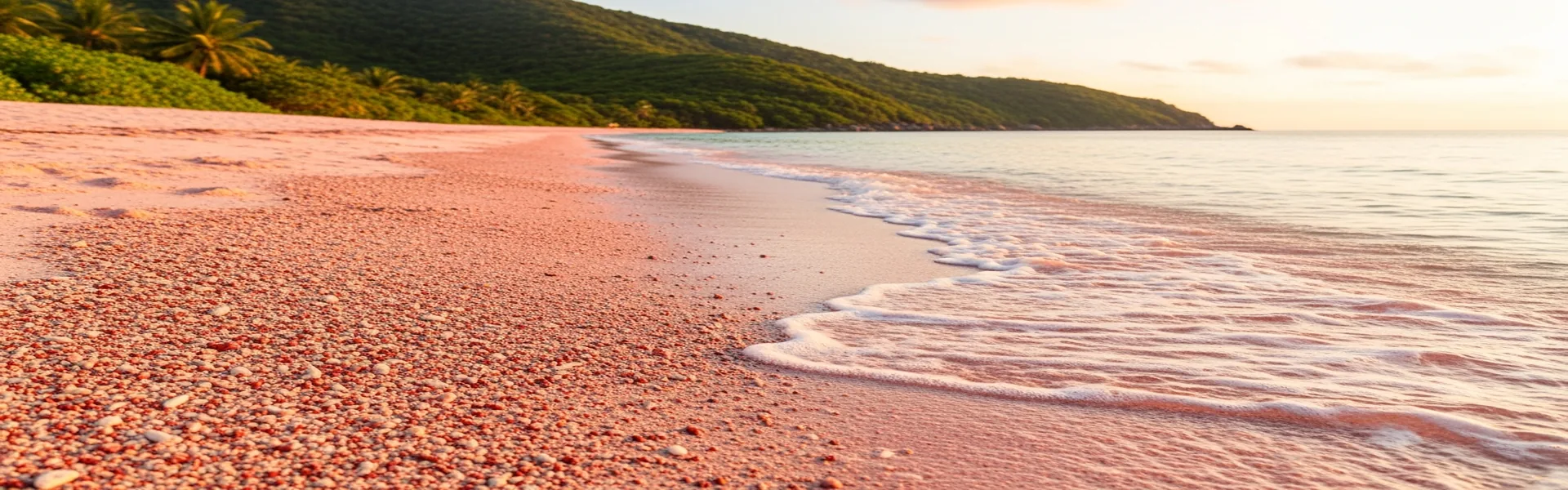
Pink Beach Komodo: A Natural Wonder Awaits
Discover the magical allure of Pink Beach, one of the world's rarest and most stunning coastal destinations. Experience pristine pink sand, crystal-clear turquoise waters, and top-tier snorkeling in this UNESCO World Heritage haven.

An intimate yet expansive coastline perfect for swimming, lounging, and exploration in an exclusive tropical setting.
Comfortable year-round diving and snorkeling conditions with excellent visibility and thriving marine ecosystems.
Vibrant coral reefs host incredible biodiversity including reef sharks, rays, and colorful tropical fish species.
The Science Behind the Pink Sand
Pink Beach is genuinely pink—not a marketing gimmick, but a geological marvel. The distinctive pink coloration results from a fascinating combination of natural elements that have developed over millions of years. Red volcanic minerals, particularly magnetite and hematite, combine with crushed coral fragments and organic matter to create the unique rose-tinted sand that makes Pink Beach unmistakably beautiful.
Volcanic Origin
The Komodo archipelago sits atop active volcanic geology, creating mineral-rich sand deposits. Red volcanic minerals oxidize over time, developing the distinctive pink hue visible on the beach today. This geological history spans millions of years, making Pink Beach a living testament to Earth's dynamic processes.
Coral Fragment Contribution
Pristine coral reefs surrounding the beach constantly shed fragments through natural processes and wave action. These white and cream-colored coral pieces mix with red volcanic sand, creating the perfect balance that produces the iconic pink appearance. The healthier the reef, the more vibrant the beach color.
The pink sand's composition makes it particularly significant from a scientific perspective. The presence of these minerals indicates active volcanic processes and healthy coral ecosystems, making Pink Beach an important indicator of environmental conditions in the region. Conservation of this unique beach protects both its natural beauty and ecological significance.
Snorkeling Reef Guide: Explore Underwater Paradise
Pink Beach offers some of the finest snorkeling opportunities in Southeast Asia. The fringing coral reef system starts just meters from the shoreline, making this destination accessible for snorkelers of all experience levels. The combination of shallow coral gardens and deeper reef sections ensures exciting discoveries for everyone.
Coral Garden Zone (0-5m Depth)
The shallow coral gardens near the beach are ideal for beginning snorkelers and families. This vibrant ecosystem features soft corals, branching hard corals, and abundant small tropical fish species. Here you'll encounter clownfish, parrotfish, butterflyfish, and damselfish navigating through healthy coral structures. The visibility typically exceeds 20 meters, making underwater photography exceptional.
Drop-Off Zone (5-15m Depth)
Experienced snorkelers can venture to the reef's outer edge, where the seabed drops dramatically. This zone features impressive coral formations, larger fish species, and occasional reef sharks patrolling the deeper waters. Hawksbill and green sea turtles frequently glide through these waters, providing memorable encounters. The contrast between shallow reefs and the dramatic drop-off creates stunning visual scenery.
Marine Life Encounter Guide
Fish Diversity
Encounter over 500 fish species including reef sharks, groupers, snappers, fusiliers, jacks, and numerous small reef dwellers. The reef supports entire food chains from tiny zooplankton to apex predators.
Sea Turtles
Green and hawksbill sea turtles frequent Pink Beach waters, particularly during certain seasons. Observe these gentle giants grazing on seagrass beds and gliding through deeper reef channels.
Coral Systems
Hard and soft corals create intricate three-dimensional structures supporting diverse marine life. Observe hard coral growth patterns and soft coral feeding behaviors during early morning hours.
Snorkeling at Pink Beach provides genuine wildlife encounters in pristine conditions. Our expert guides understand current patterns, seasonal variations, and marine behavior, positioning you for optimal observation without disturbing natural ecosystem processes.
Photography Tips: Capture Pink Beach Beauty
Pink Beach's natural light, striking colors, and pristine scenery create exceptional photography opportunities. Whether you're using a smartphone camera or professional equipment, these expert tips will help you capture stunning images of your Pink Beach experience.
Golden Hour Magic (Early Morning and Late Afternoon)
The hour after sunrise and the hour before sunset provides the most flattering light for photography. During these periods, warm golden tones illuminate the pink sand, enhancing its natural color while creating dramatic shadows that add dimension to your images. The soft, diffused light minimizes harsh contrasts and skin shadows when photographing people on the beach.
Underwater Photography Excellence
Pink Beach's exceptional water clarity creates ideal conditions for underwater photography. Use a waterproof housing or underwater camera to capture coral formations, tropical fish, and sea turtles in their natural habitat. Polarizing filters reduce water surface reflections and enhance color saturation. Shoot during mid-day when water clarity peaks, though golden hour light filtering through shallow water creates ethereal images.
Beach Composition Techniques
Foreground Interest
Include rocks, shells, or vegetation in the foreground to create depth and context. Frame the pink sand with surrounding landscape elements for compelling compositions that showcase the beach's unique setting within the broader Komodo landscape.
Drone Photography Perspective
Aerial drone views reveal Pink Beach's crescent shape and position within the surrounding seascape. The perspective from above emphasizes the contrast between pink sand, turquoise water, and darker volcanic hillsides, creating visually striking images.
Color Enhancement and Settings
The pink sand naturally displays stunning color without excessive saturation or filter manipulation. Use vibrant color profiles and modest saturation boosts to enhance natural tones. Increase contrast slightly to emphasize the pink sand against turquoise water. Avoid over-processing, as the beach's natural beauty speaks for itself. Shoot in RAW format when possible to maximize post-processing flexibility while maintaining image quality.
Best Time to Visit Pink Beach
Pink Beach experiences distinct seasonal variations that affect visibility, marine life encounters, and overall experience quality. Understanding these seasonal patterns helps you plan your visit for optimal conditions aligned with your specific interests.
Dry Season (April to November): Ideal Snorkeling Conditions
The dry season represents the optimal period for Pink Beach visits. Ocean conditions remain calm with consistent winds creating ideal snorkeling and swimming circumstances. Water visibility extends to 30+ meters, allowing clear observation of coral reefs and marine life. Fewer rain showers mean extended periods of sunshine, perfect for beach activities and photography. Accommodation availability decreases during peak months (July-August), so advance booking is essential for summer visits.
Wet Season (December to March): Unique Characteristics and Fewer Crowds
While the wet season brings occasional rainfall, Pink Beach remains visitable during this period. Water visibility ranges from 15-25 meters, still excellent for snorkeling. Visiting during wet season months offers fewer crowds, lower prices, and more exclusive experiences. Marine life concentrations shift slightly as seasonal currents change nutrient distribution patterns. The dramatic cloud formations during afternoon showers create spectacular photography opportunities. Diving operations continue with appropriate precautions, and the wet season actually brings certain fish species closer to the reef.
Shoulder Seasons (March-April and November-December)
Transition months provide excellent compromise conditions. Weather remains mostly pleasant with occasional rain, while crowd levels are moderate. Water conditions steadily improve during March-April as dry season approaches. November marks the beginning of wetter conditions but typically features calm seas and excellent visibility. These periods offer the best value for budget-conscious travelers seeking genuine Pink Beach experiences without peak season crowds or pricing.
How to Access Pink Beach
Pink Beach's remote location within the Komodo National Park requires thoughtful travel planning. Multiple access options exist depending on your preferences, timeline, and budget considerations.
Private Cruise Access (Recommended)
Our luxury private cruises provide the most convenient and exclusive Pink Beach access. Multi-day itineraries include dedicated Pink Beach time, combining the experience with visits to other Komodo highlights like Padar Island, Rinca Island, and Komodo Island. Private cruises offer schedule flexibility, personalized services, and expert guides who enhance your understanding of the beach's geology and ecology. This option ensures comfortable transportation, gourmet meals, and seamless logistical coordination.
Day Trip from Labuan Bajo
Fast boats depart daily from Labuan Bajo harbor for day trip cruises to Pink Beach. These typically include 4-6 hours at the beach plus snorkeling time, breakfast, lunch, and drinks. Day trips provide budget-friendly Pink Beach access without multi-day commitments. Groups combine with other tourists, creating social experiences and shared costs. This option suits travelers with limited time or flexible schedules.
Transportation from Bali
International visitors typically fly into Bali, then arrange connecting flights or ferry transportation to Labuan Bajo (the main gateway to Komodo National Park). Direct flights from Denpasar Airport to Labuan Bajo take approximately 2.5 hours. Ferry services operate from Bali's ports, offering budget-friendly but time-consuming alternatives. Once in Labuan Bajo, our private cruises or local boat operators arrange Pink Beach transport.
Park Entry Requirements
Access to Pink Beach requires Komodo National Park entry permits, included in all cruise packages. Park rangers regulate visitor numbers to protect this delicate ecosystem. Our experienced guides manage all permit coordination, documentation, and park authority communications, ensuring seamless compliance with conservation regulations.
Frequently Asked Questions About Pink Beach
Is the pink sand naturally occurring or artificially created?
The pink coloration is entirely natural, resulting from millions of years of geological processes. Red volcanic minerals including magnetite and hematite oxidize over time, combining with crushed white coral fragments to create the distinctive appearance. The pink color is not dyed or artificially enhanced—it's a genuine result of volcanic geology and coral ecosystem interaction. Scientific analysis confirms the mineral composition and natural origins of Pink Beach's unique characteristics.
What marine life can I expect to see while snorkeling at Pink Beach?
Pink Beach's reef system supports over 500 fish species, making encounters with diverse marine life virtually guaranteed. Expect to see colorful tropical fish including parrotfish, butterflyfish, clownfish, and reef sharks. Sea turtles (both green and hawksbill species) frequent these waters, particularly during certain seasons. Larger species including groupers, snappers, and tuna occasionally patrol the deeper reef sections. Invertebrates like sea urchins, starfish, and crustaceans inhabit the coral structures, contributing to the ecosystem's remarkable biodiversity.
Is Pink Beach safe for swimming and snorkeling?
Pink Beach offers excellent safety conditions for swimming and snorkeling with proper precautions. Water temperatures remain warm and comfortable year-round at approximately 27°C. Currents exist but are generally manageable for experienced swimmers. Our professional guides brief all visitors on current patterns, proper snorkeling techniques, and appropriate depth zones. Lifeguard presence varies; we recommend snorkeling with authorized guides who understand local conditions and can monitor safety in real-time. The reef's proximity to shore (within meters) ensures quick return to shallow water if needed.
How do I protect Pink Beach's ecosystem while visiting?
Responsible tourism practices ensure Pink Beach remains pristine for future generations. Apply reef-safe sunscreen (avoiding oxybenzone and octinoxate) to prevent coral damage. Avoid stepping on or touching coral structures, which are fragile and easily damaged. Refrain from removing shells, sea stars, or other marine organisms. Maintain distance from sea turtles and large fish species to avoid disrupting natural behaviors. Use designated snorkeling areas and follow guide instructions regarding appropriate locations and depth zones. Taking only photographs and leaving only footprints preserves the beach's ecological integrity.
What should I pack for a Pink Beach visit?
Essential items include reef-safe sunscreen, a waterproof camera or phone case, snorkeling gear (or rental equipment available on-site), a rash guard or UV protection shirt, sunglasses with UV protection, and a reusable water bottle. Comfortable walking shoes suit rocky approach areas, while water shoes provide reef exploration protection. Bring medications, insect repellent, and any required prescription items. A light jacket accommodates air-conditioned accommodations. Optional items include underwater photography equipment, a snorkel vest for extra buoyancy, and a dry bag protecting electronics. Our guides provide detailed packing lists customized to seasonal conditions and cruise duration.
Related Pink Beach Experiences
Maximize your Komodo adventure by combining Pink Beach with complementary experiences that showcase the region's remarkable biodiversity and natural wonders.
Padar Island Adventure
Hike to dramatic viewpoints overlooking three colored beaches and crystal-clear waters. Padar Island's trekking trails reward adventurous travelers with panoramic perspectives and excellent photography opportunities of the surrounding landscape.
World-Class Snorkeling & Diving
Beyond Pink Beach, explore other premier snorkeling and diving sites throughout Komodo. Experience thriving coral ecosystems, encounter exotic marine species, and discover underwater caves in pristine conditions.
Komodo Island Hopping Tours
Combine Pink Beach with visits to Rinca Island, Komodo Island, and other archipelago highlights. Island hopping expeditions reveal diverse ecosystems, wildlife encounters, and landscape variations across multiple UNESCO World Heritage destinations.
Day Cruise Expeditions
Efficient day cruises maximize Pink Beach time while accommodating limited schedules. These comprehensive experiences include breakfast, lunch, snorkeling instruction, and professional guide services ensuring memorable encounters.
Trust & Quality Assurance
Experience Pink Beach Luxury
Pink Beach represents the pinnacle of natural coastal beauty combined with top-tier snorkeling opportunities. Our private cruises provide exclusive access to this UNESCO World Heritage wonder, with expert guides, luxurious accommodations, and unforgettable marine encounters.
Ready to Begin Your Komodo Adventure?
Contact our luxury cruise specialists for personalized itinerary planning and exclusive charter options.
📱 WhatsApp / Phone: +62 811 382 3875
📧 Email: [email protected]